
Santa Rosa finance staff warn of ‘stark and sobering’ situation in coming years despite efforts to find savings
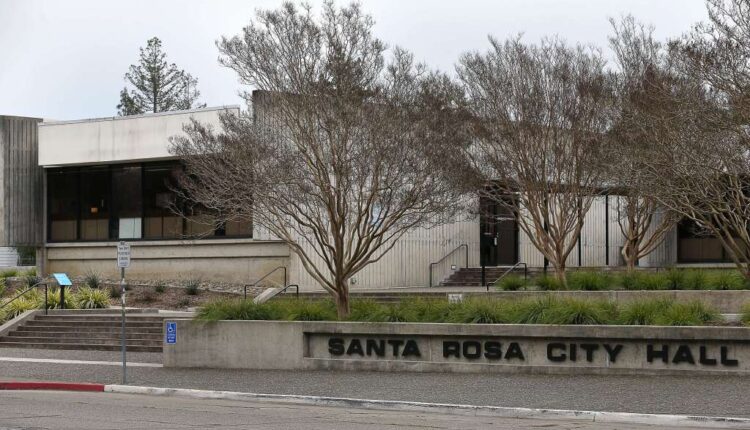
Santa Rosa will close a projected $17.5 million operating deficit in the new fiscal year that starts July 1 through a combination of efforts aimed at reducing pension and vehicle costs, eliminating vacant positions and tapping reserves.
The proposal will minimize drastic service cuts and buys the city just a bit more time to turn around its troubled budget.
But finance officials warned that without additional revenue, the city will be looking at a fourth straight year of reductions in the following fiscal year that will have deep impacts on public safety staffing, recreation and public works.
That was the takeaway of a two-day budget workshop where Interim City Manager Lori Ann Farrell and Chief Finance Officer Scott Wagner presented the proposed 2026-27 budget to the City Council.
“We are very proud of the proposed budget and the ability we’ve had to mitigate impact to our organization and to the community, but the reality of our situation is still stark and sobering going forward,” Wagner said.
The potential future cuts could amount to about 60 layoffs to address the long-term deficit, which would push staffing levels in the general fund below those reported about 16 years ago coming out of the Great Recession.
Reductions could include the elimination of one of the fire department’s ladder trucks as well as positions in the police department’s specialty teams, such as narcotics, traffic enforcement and the downtown team. Those proposals were floated last year and were widely unpopular among the community, the affected departments and council members who ultimately pushed for staff to find other areas in the budget to trim.
City executives anticipate returning immediately after the June budget adoption to discuss potential revenue measures that could shore up city finances and proposed reductions should voters fail to pass a tax extension or other measure.
Polling paid for by the city and conducted earlier this year showed qualified support for renewing the city’s general sales tax and potentially doubling the current half-cent rate to stabilize the budget. A one-cent measure could generate an estimated $46 million annually, if approved by voters.
Overall, the citywide budget, including the general fund, enterprise funds and the capital budget that pays for roads, parks and other infrastructure, is set at about $575 million, up $20.6 million or 3.7% over the current $554 million budget.
Department heads this year were directed to propose largely flat budgets that maintained current staffing levels and programs and did not include any new spending, other than contractual salary increases and other uncontrollable costs such as retirement and medical benefits.
Initial general fund budget figures presented to the City Council in April called for $225.5 million in revenues from sales, property and other taxes and fees and $243 million in spending for most daily operations.
The $17.5 million deficit is the result of rising payroll expenses and other costs that have continued to outpace revenues as sales taxes have dipped in the prior three years. Though sales tax revenues appear to be stabilizing, finance officials project just a minor increase of $1.5 million in the new year.
Meanwhile, salaries were projected to grow by about $10.4 million and benefits by $2.5 million, totaling $178.4 million, about 73% of the total general fund budget.
Part of that growth was due to expiring or declining one-time funds that currently pay for 19 positions in the fire department.
Following Farrell’s initial review of the base budget, the city manager directed department heads to develop proposed reductions totaling 1% and 3% of their department budget, which could result in savings equal to about a quarter of the total deficit.
Farrell and finance officials also studied other ways to capture more revenue and curb spending, seeking to preserve services and staffing.
The revised expenditure plan presented Tuesday, May 5, includes about $10 million in new revenue and savings that will help shrink the expected deficit to about $7.6 million.
The plan, in part, will require shifting grant funded positions under new funding pots, consolidating departments and eliminating vacancies.
Twelve firefighter positions funded by a federal grant that have staffed two squads that roam the city and can more quickly respond to emergencies will be absorbed via existing vacancies in the general fund as well as paid for by a special tax voters passed in 2024 to fund fire operations.
Six single-role paramedic positions within the city’s inRESPONSE crisis team will be permanently eliminated as the program sees its funding slashed in half in the new fiscal year.
Sonoma County provided about $3 million this year to keep the program afloat after federal pandemic aid that previously paid for the program ran out but will be allocating only $1.6 million next year requiring the city to rethink operations to keep the program running.
The standalone communications and intergovernmental relations team will be moved under the city manager, and the parking division will move to the Planning and Economic Development Department, which will result in small savings from one position being reclassified.
Ten vacant positions across other departments will be eliminated.
The changes result in a net 28 positions eliminated and a savings of about $4.3 million.
Finance officials also intend to restructure pension debt, which will provide more stable and predictable annual payments and allow the city to more quickly pay it off, which will result in $3.8 million in savings. Staff will return in June with a policy for the council’s consideration, Wagner said.
Another $1 million in savings will come from a proposal to finance the purchase of costly fire department apparatus.
The plan also calls for reducing how much the general fund contributes toward capital expenses by about $100,000, and the city intends to capture more revenue by charging credit card convenience fees for planning and permit fees, which could bring in an estimated $264,000.
Wagner proposes tapping reserves to close the remaining $7.6 million deficit.
The draft budget will be published June 2 and the council is expected to adopt it June 16.
Farrell, the city manager, said prior efforts to reduce spending and boost reserves plus the revised spending plan for the new fiscal year will put the city on a glidepath toward a balanced budget.
Long-term projections show that the updated budget plan will help slash expected deficits in future years by more than half, with the four-year deficit now expected to reach $13.8 million, about $20 million less than earlier projections.
That also will help ensure the city maintains required levels of reserves to cover expenses in an emergency.
City Council policy requires the city set aside in savings an amount equal to 17% of operating expenditures, but the city was dangerously close to falling below that in the new fiscal year prior to the budget updates.
Though a more manageable amount, city leaders said the city has cut all it can and hard decisions will be required moving forward.
“We’ve made the efforts at the city that the community and we all should expect and unfortunately this is where we’ve landed — at the end of this runway where we need to take more proactive approaches to fixing our structural deficit,” Wagner said.
Mayor Mark Stapp thanked staffers for their work and said the city has taken significant steps to bring “our own books into order as best we can.”
He said conversations about additional steps to close the long-term deficit would continue in the community and among staff and council members in the coming months.
You can reach Staff Writer Paulina Pineda at 707-521-5268 or paulina.pineda@pressdemocrat.com. On X (Twitter) @paulinapineda22.


Comments are closed.