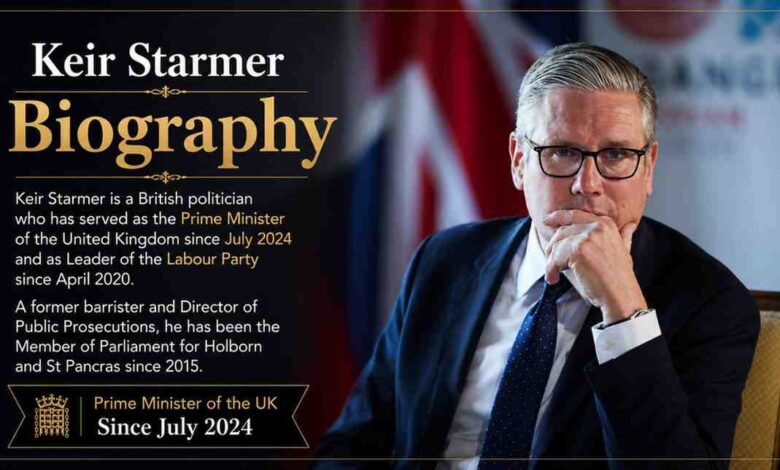
Keir Starmer (born 2 September 1962) is a British politician and lawyer who has been Prime Minister of the United Kingdom since 2024 and Leader of the Labor Party since 2020.
Starmer announced his resignation from both positions on 22 June 2026and will remain in office until the conclusion of the Labor Party leadership election.
Starmer was Leader of the Opposition from 2020 to 2024 before becoming Prime Minister. He has been Member of Parliament (MP) for Holborn and St Pancras since 2015, having previously served as Director of Public Prosecutions from 2008 to 2013.
Biography of Keir Starmer
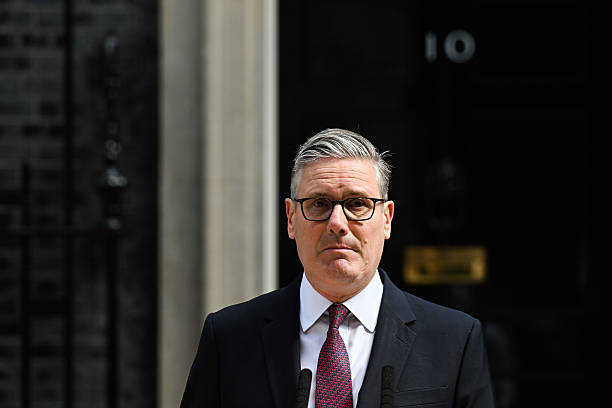
Keir Rodney Starmer was born on 2 September 1962 in Southwark, South East London, and grew up in Oxted, Surrey. He is the second of four children born to Josephine, a nurse, and Rodney Starmer, a toolmaker. His mother developed Still’s disease.
Both his parents were members of the Labor Party, and he is said to have been named after the party’s first parliamentary leader, Keir Hardie, although Starmer refused to confirm this when asked in 2015.
It was named Keir after the first parliamentary leader of the Labor Party, J. Keir Hardie. Starmer grew up in Surrey, where he attended Reigate Grammar School, an elite state school that later became private.
He was the first member of his family to graduate from university, gaining a Bachelor of Laws degree from the University of Leeds in 1985.
He then went on to graduate with a degree in civil law at St. Edmund Hall, Oxford. Between 1986 and 1987, Starmer belonged to the editorial team of the left-wing journal Socialist Alternative.
Career
Starmer began his legal practice in 1987 at the Middle Temple, one of London’s Inns of Court. Three years later, he co-founded the law firm Doughty Street Chambers, where he was joint manager for several years, starting in 2002.
That year he was appointed Queen’s (now King’s) Counsel (a senior lawyer chosen to advise the Crown). Starmer’s primary practice was criminal defense law, with a particular focus on human rights issues in the UK and abroad.
He has represented criminals on death row in many Caribbean countries and was a member of the Foreign and Commonwealth Office’s Death Penalty Advisory Council between 2002 and 2008.
In addition, he worked as a human rights adviser for the Police Authority of Northern Ireland (2003-08) and the Association of Chief Constables. He would later describe the time he spent in these positions as significantly influencing his choice to run for parliament.
In 2008, Starmer became Director of Public Prosecutions (DPP) and head of the Crown Prosecution Service (CPS), a position he held until 2013. Among the most high-profile cases during Starmer’s tenure as DPP was the sexual abuse scandal involving media celebrity Jimmy Savile, which the CPS controversially decided not to prosecute.
In 2022, Conservative Prime Minister Boris Johnson would make the likely politically driven (and unsubstantiated) accusation that Starmer was responsible for the decision not to prosecute Savile.
At least partly as a result of the incident (and the mistaken belief that false rape allegations were common), Starmer introduced changes to the handling of sexual assault allegations to prevent procedures that could “result in injustice” to rape victims.
While serving as DPP, Starmer oversaw the prosecution of Chris Huhne, the Secretary of State for Energy and Climate Change, who was forced to resign from the Conservative-Liberal coalition government over criminal proceedings stemming from a speeding incident.
During the 2011 riots in London and other British cities, Starmer argued for swift prosecutions instead of lengthy prison terms. In recognition of his contribution to law and criminal justice, he was appointed Knight Commander of the Order of the Bath (KCB) in 2014.
Political career
In December 2014, many months after MP Frank Dobson announced his retirement, Starmer was selected as the Labor candidate for Dobson’s seat in the London constituency of Holborn and St. Pancras.
He was elected to the position in the House of Commons on 7 May 2015. Although it was predicted that Starmer might stand to replace Ed Miliband as leader of the Labor Party in 2015, he declined, citing inexperience.
Instead, Miliband’s successor, Jeremy Corbyn, chose Starmer as shadow home secretary. However, in June 2016, Starmer resigned along with a number of other shadow ministers after losing confidence in Corbyn’s leadership in the face of Brexit developments.
Despite this, Corbyn, who was re-elected as leader later that year, appointed Starmer as shadow Brexit secretary.
After the 2019 general election, which saw the Labor Party suffer its biggest defeat since 1935, Corbyn resigned as leader. Starmer announced his candidacy for the seat in January 2020 and won the election on 4 April.
Although Starmer ran his candidacy on a socialist platform, the Labor Party has moved away from Corbyn’s left-wing ideas towards the political center under his leadership. Starmer has been accused by some party members of fomenting factionalism and marginalizing or expelling people on the left.
Notably, Starmer tabled a motion which saw Labour’s National Executive Committee refuse to back Corbyn as Labour’s candidate for the House of Commons at the next general election, citing Corbyn’s alleged failure to adequately address revelations of anti-Semitism within the party during his tenure as leader.
In February 2023, Starmer detailed five “national missions” – long-term goals for the economy, crime, the NHS, education and the climate crisis – which he recommended as the basis for Labour’s next manifesto.
In May 2024, Prime Minister Rishi Sunak called for a general election in July of that year, more than six months before the legally allowed period. Starmer’s Labor Party was doing well in the polls, but on July 4, 2024, voters delivered a historic landslide victory.
The Conservatives lost more than 250 seats, the vast majority of which went to Labour.
While Starmer hailed his victory with the slogan “change starts now”, an examination of the underlying voting trends showed elements that led some in the media to label the results a “loveless landslide”.
Turnout was 59.9 percent, the second lowest since Britain introduced universal suffrage in 1928. Perhaps more worrying for Labor was the party’s overall share of the vote.
Although Labor won 412 seats in parliament – a landslide majority of 63 per cent – its share of the vote was only 33.7 per cent. This marked an increase of just 1.6 per cent on the 2019 general election, which was a landslide victory for the Conservatives.
Starmer’s honeymoon period was limited, and his centrist economic policies drew criticism not from the opposition Conservatives, but from within his own party. When Starmer proposed cuts to disability benefits as part of the welfare reform package in May 2025, dozens of Labor MPs signed an open letter pledging to vote against it.
Weeks of fighting would follow as Starmer tried to quell a rebellion that grew to include almost 120 Labor supporters. A drastically scaled-down version of the measure was passed in July, but 49 Labor MPs voted against it and Starmer’s position within his own party appeared shaken.
Starmer reshuffled his cabinet in September 2025 after Deputy Prime Minister Angela Rayner resigned over a controversy involving underpayment of tax on another property.
David Lammy was appointed Lord Chancellor and Deputy Prime Minister; Yvette Cooper moved from Home Secretary to Foreign Secretary; and Shabana Mahmood was promoted from Lord Chancellor to Home Secretary.
Starmer’s administration includes several senior Labor MPs from the Tony Blair and Gordon Brown eras. Among them was Peter Mandelson, Brown’s former business secretary, who was appointed ambassador to the United States in December 2024.
The appointment originally raised doubts because Mandelson had previously described the US president. They described Donald Trump as a “thug” who is “reckless and dangerous to the world”. Mandelson denied these claims, but soon became embroiled in an even bigger dispute.
In September 2025, the United States Congress released a series of documents from the “Epstein Files,” a compilation of information obtained during two criminal investigations against American businessman and convicted sex offender Jeffrey Epstein. Mandelson called Epstein his “best friend” in one document, and was fired days after the revelations.
The second batch of “Epstein files” were revealed in January 2026, and for Mandelson they were even more devastating than the first. The emails suggested that Mandelson had used his position as business secretary to personally benefit Epstein.
Other emails appear to show Mandelson received payments from Epstein totaling $75,000. Mandelson was investigated by Scotland Yard for “misconduct in public service” and he was arrested in February.
At the time of the Mandelson-Epstein revelations, Starmer already had 75% unfavorability, and the dismissal of the senior official in charge of the Mandelson vetting procedure did little to calm the storm.
Although Starmer was questioned in parliament about Mandelson’s appointment and his comments about it, MPs voted against opening an official inquiry.
On 7 May 2026 local council seats in England were contested, as were parliamentary elections in Scotland and Wales. The event was widely interpreted as a referendum on Starmer’s performance as Prime Minister.
Although Labor fared badly across the board, losing more than 1,300 local council seats, the election also highlighted the ongoing fragmentation of Britain’s political scene. Newer parties, such as Reform UK and the Greens, have significantly increased their representation at the expense of Labor and the Conservatives.
Nationalist parties also fared well; Plaid Cymru broke Labour’s century-long hold on Wales, while the Scottish National Party became the largest party in the Scottish Parliament.
A small group of Labor MPs began calling for Starmer’s resignation almost as soon as the results were announced, but he vowed he would “not stand down” as prime minister and “plunge the country into chaos”.
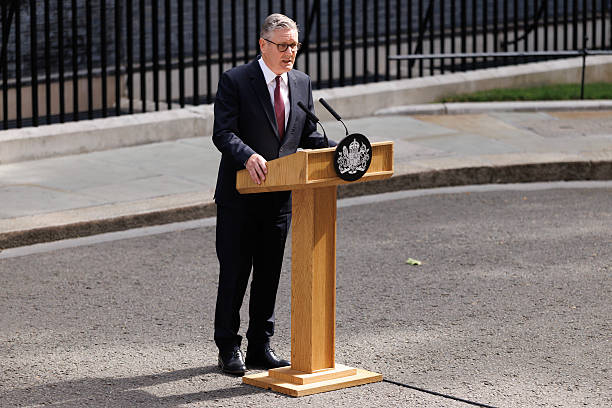
On June 22, 2026 Starmer announced his resignation as Prime Minister and the leader of the Labor Party, and called on the National Executive Committee of the Labor Party to set a timetable for selecting his successor, with nominations opening on 9 July and the process ending before the summer holidays. Starmer will remain in his duties until the end of the leadership election.
Personal life
Like Starmer, his wife Victoria Starmer, whom he married in 2007, is a trained legal professional. He currently works in occupational medicine for NHS. The couple have a son and a daughter and live in North London.
Starmer has been interested in football (soccer) all his life, has played at amateur levels and has been a loyal Arsenal fan since childhood. As a child he had violin lessons from Norman Cook (later a member of the pop group Housemartins, now better known as Fatboy Slim) and met Andrew Sullivan, a British-born American conservative political commentator.
Keir Starmer Net Worth
Keir Starmer’s net worth is expected to be between £7m and £10m by 2026. This wealth derives mainly from his successful legal career, parliamentary salaries and pensions, rather than high-profile commercial enterprises or speculative investments.