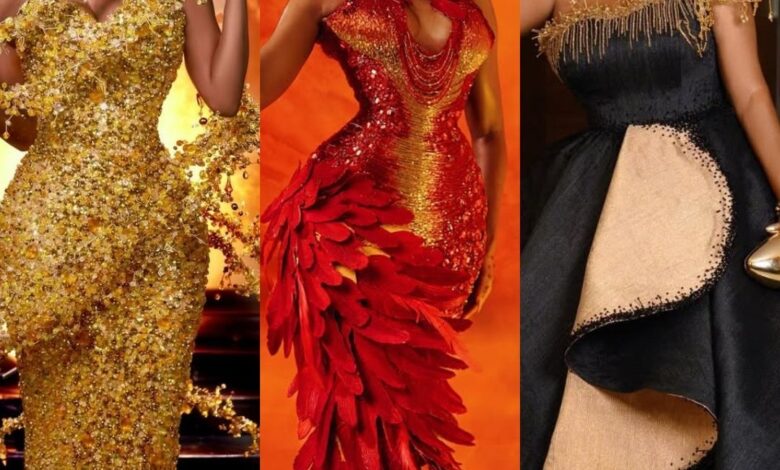
The red carpet lasts several hours. A dress, in theory, can last forever. But the distance between those two things, the camera flash and what follows, is rarely discussed. We discuss appearance. We rank them. We make them go viral. What we almost never ask is: where does the dress go on Sunday morning?
That’s a question worth sitting down with, especially now. AMVCA, Headies and Nollywood’s ever-growing film premiere circuit have transformed Nigerian entertainment into one of the most visually appealing fashion ecosystems on the continent. Designers spend weeks, sometimes months, constructing a single look. Stylists negotiate, supply and fit. Celebrities shell out tens, sometimes hundreds of thousands of naira for one night. And then the night ends.
So what happens next?
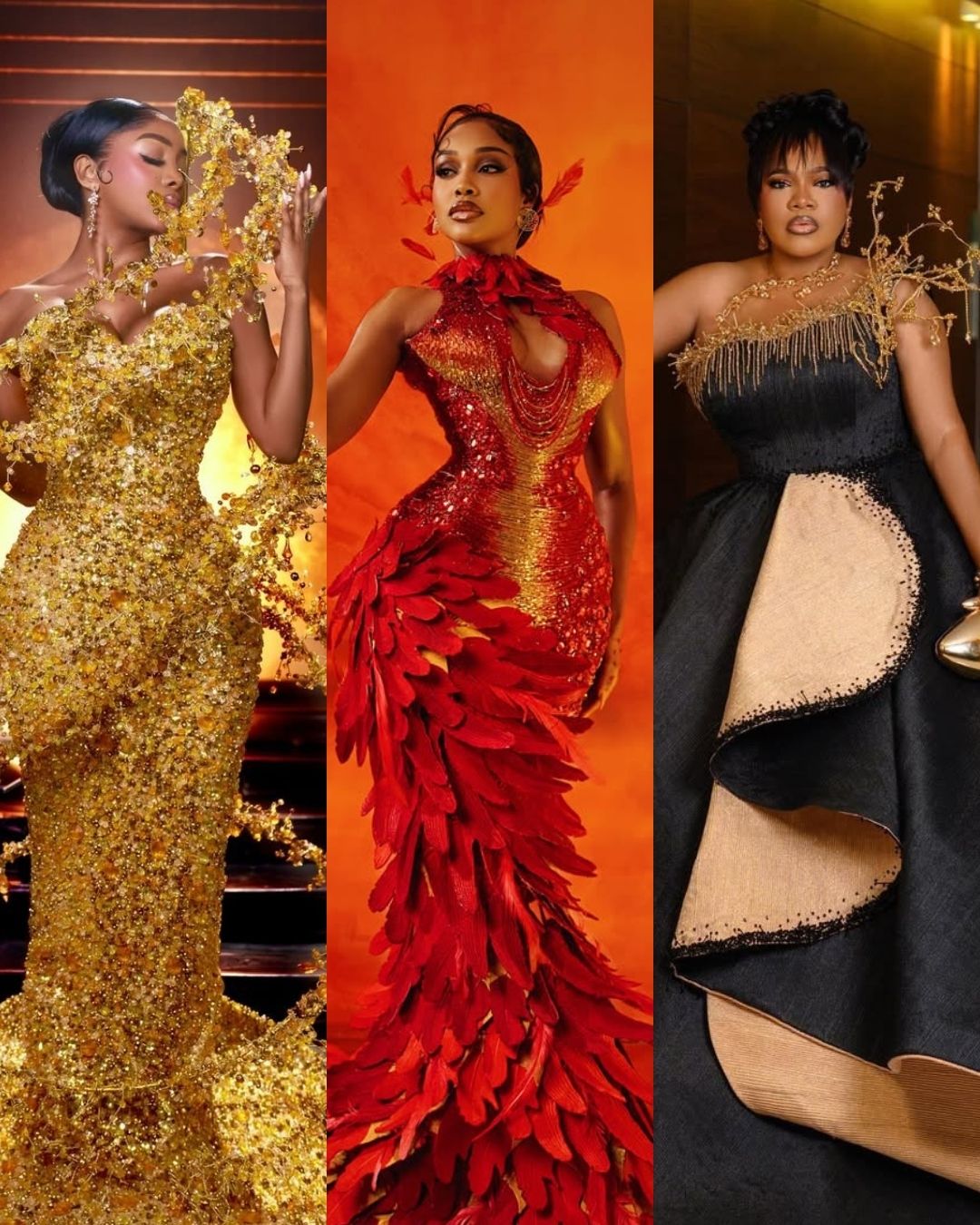
Creating a Nigerian look on the red carpet
To understand what happens after, you have to understand what happens before. In the Nigerian entertainment landscape, the red carpet has become an event in itself.
AMVCA has evolved into much more than a fun awards ceremony, it has become a premier showcase for African fashion excellence, generating widespread social media engagement and positioning Nigerian fashion at the center of global conversations. Headies has also become a major fashion event in its own right, with Nigerian celebrities donning looks that blend tradition, creativity and glamour. And there are movie premieres, launches of Nollywood blockbusters, themed galas that have become a category of spectacle in themselves. In a culture where looks speak louder than words and where clothing is expected to be exclusive and unique, the pressure to show off in luxury has become a heavy burden. Most of these glamorous looks, once worn and caught on camera, are considered retired.
Designer Bukola Owolabi Emagine of Bukola explains that the construction of the work is already shaped by what happens to it later.
“We try to design with longevity in mind, even when the piece is dramatic. We think about whether it can be styled, altered, archived or transformed later. A beautiful garment shouldn’t feel disposable after one night.”
This is the central tension. A look that takes weeks to create for a few minutes in front of the camera and then, for most, disappears.
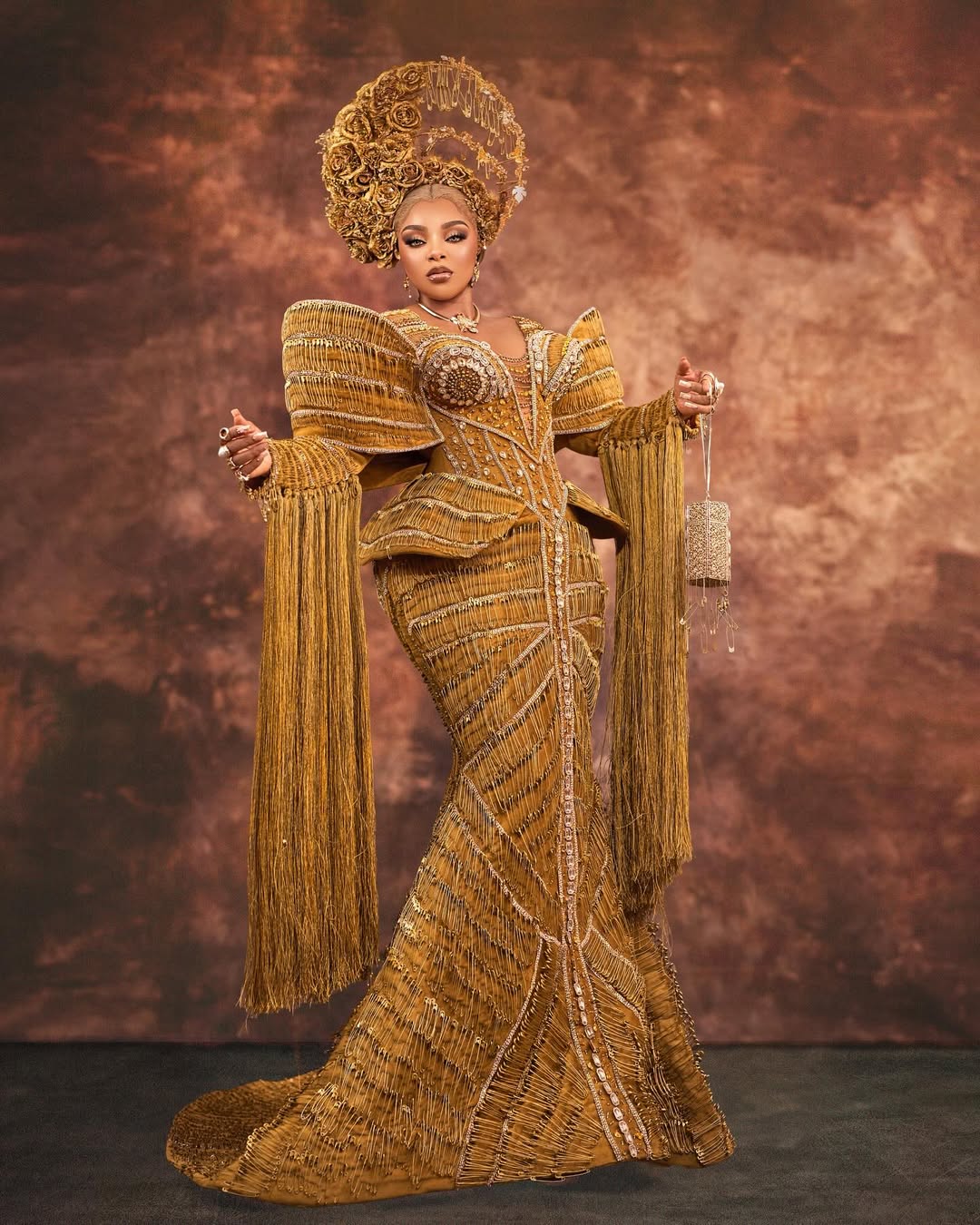
Worn once, gone forever: the disposable culture
In Nigerian celebrity culture, there is an unspoken rule that no one has written down, but almost everyone follows: don’t repeat yourself. Not for AMVCA. Not at the premiere. Not even for a smaller event where you know there won’t be the same photographers. To wear again is to admit something, though no one is quite sure what. That you can’t afford a new one? That you lack imagination? That you are not taking the opportunity seriously enough?
The result is a fashion ecosystem built almost entirely around uniqueness. Custom beaded agbada commissioned for AMVCA will not appear at Headies. The hand-embroidered dress from the Nollywood premiere will not reappear at the brand’s event three months later. A look serves its purpose, makes headlines, creates content, earns a spot on the best-dressed list, and then it’s done.
Designer Yemi Shoyemi, whose work has attracted attention at the AMVCA trade shows, notes that not all red carpet combinations find a second life.
“Some clients choose to archive them as part of their personal or professional milestones, while others return to the brand, especially if it’s on loan. Very few are repurposed, and that’s an area I believe the industry can explore more intentionally.”
Bibi Lawrencethe founder of her eponymous label, describes the same bifurcation on the designer’s part.
“What happens after the event depends on the type of garment,” she says. “If it’s a piece made to order for a client, it’s usually returned to them and becomes part of their personal wardrobe or archive. If it’s on loan or owned by a brand, it’s dry cleaned, repaired where necessary, and returned to our studio, where it’s properly stored.”
But the pressure that produces all that singularity is not abstract. As Bukola says, “The biggest challenge is the culture of novelty. Red carpet fashion is photographed, shared, judged and remembered, so there’s always pressure to create a fresh moment.”
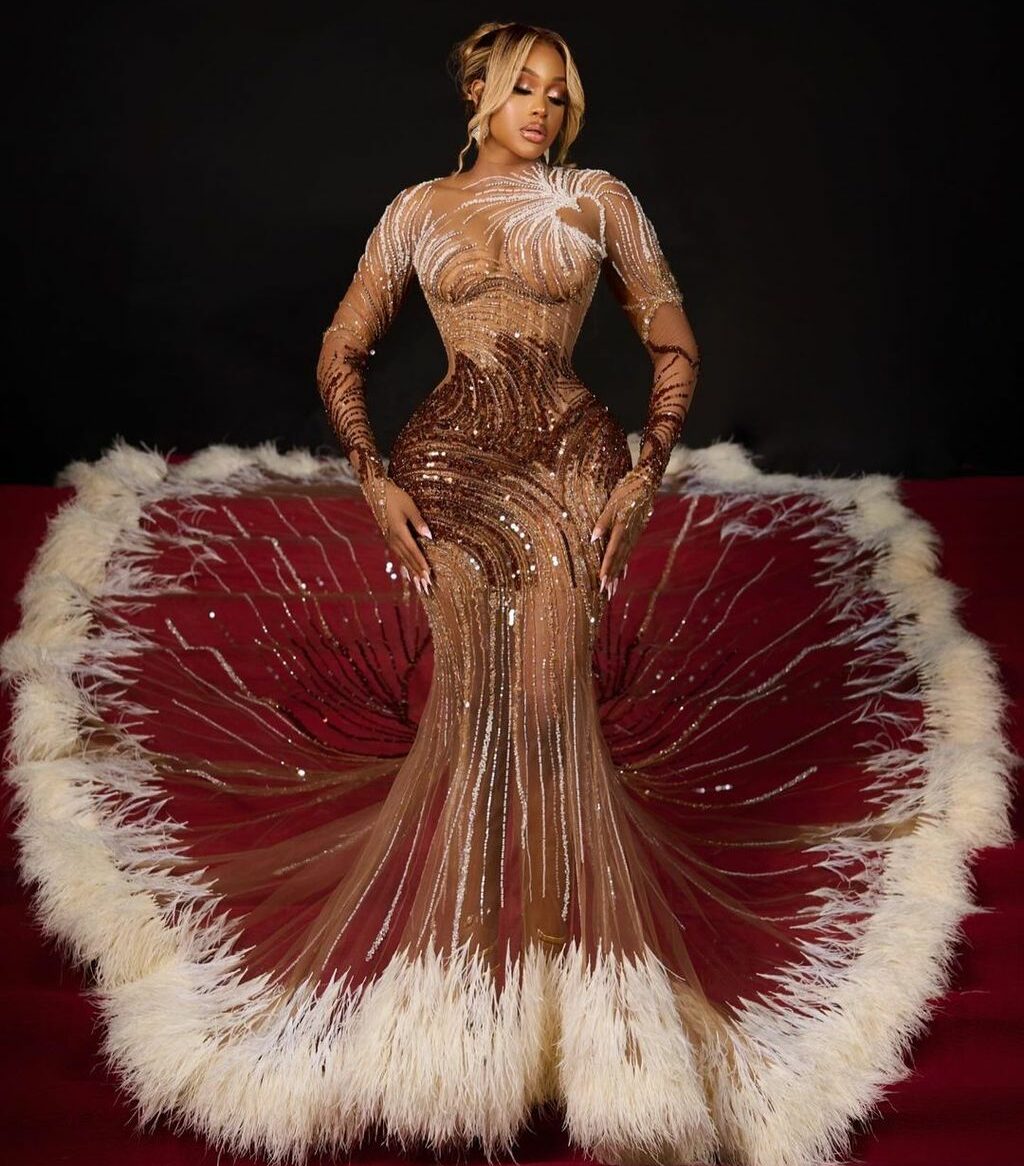
The fate of the dress: closet, credit or garment bag in the dark
When a red carpet night ends in Lagos, the clothes travel one of several routes. Some stay with the celebrity. Others return to the designer. A small number enter the gray zone of forgotten closets and unnamed warehouses.
Unlike the world’s fashion houses, Valentino, Dior, Givenchy, who have built elaborate archiving systems with air-conditioned rooms and museum-level preservation protocols, most Nigerian designers do not yet have the infrastructure for that kind of afterlife. The look is created, worn, and the question of what comes next is rarely part of the original conversation.
Bibi Lawrence is one of the designers who are actively trying to change that.
“From there, the garment can go on to live a second life. Stylists can pull pieces from us for editorials, magazine covers, films, red carpet events and special appearances. We also send some pieces to stylists overseas for international occasions, so the garment can be redesigned, archived, re-photographed, used for film projects or transformed into something new.”
But she is candid about how new such thinking is to the industry.
“After more than ten years of designing, I’ve seen how easily red carpet dresses can pile up and become waste without much thought. So I strive to ensure that each piece fits the ethos of my brand, whether it’s connected to the collection, the campaign or the larger story I’m telling through Bibi Lawrence.”
Bukola describes a similar confrontation that took place in her own studio.
“Honestly, this is something we think about a lot. Some garments are kept by clients, while others are unfortunately never worn again. We personally started keeping our own archives because we believe these pieces deserve a longer life after an event.”
For pieces not made for direct archiving, there is another strategy:
“Certain parts such as embellishments, corsets, fabrics or appliqués can be reworked and reworked into future garments rather than being completely discarded.”
What many clothes have is a digital afterlife far more permanent than a physical one. Red carpet fashion in Nigeria is not always designed for everyday use, it is more of an artistic performance. It’s meant to start conversations, dominate headlines, create images that go viral and keep conversations going long after the event is over. In this sense, the dress may be packed, but the image of the dress never truly disappears. He lives on Instagram. It is mentioned in the year-end reviews. This inspires the next commission.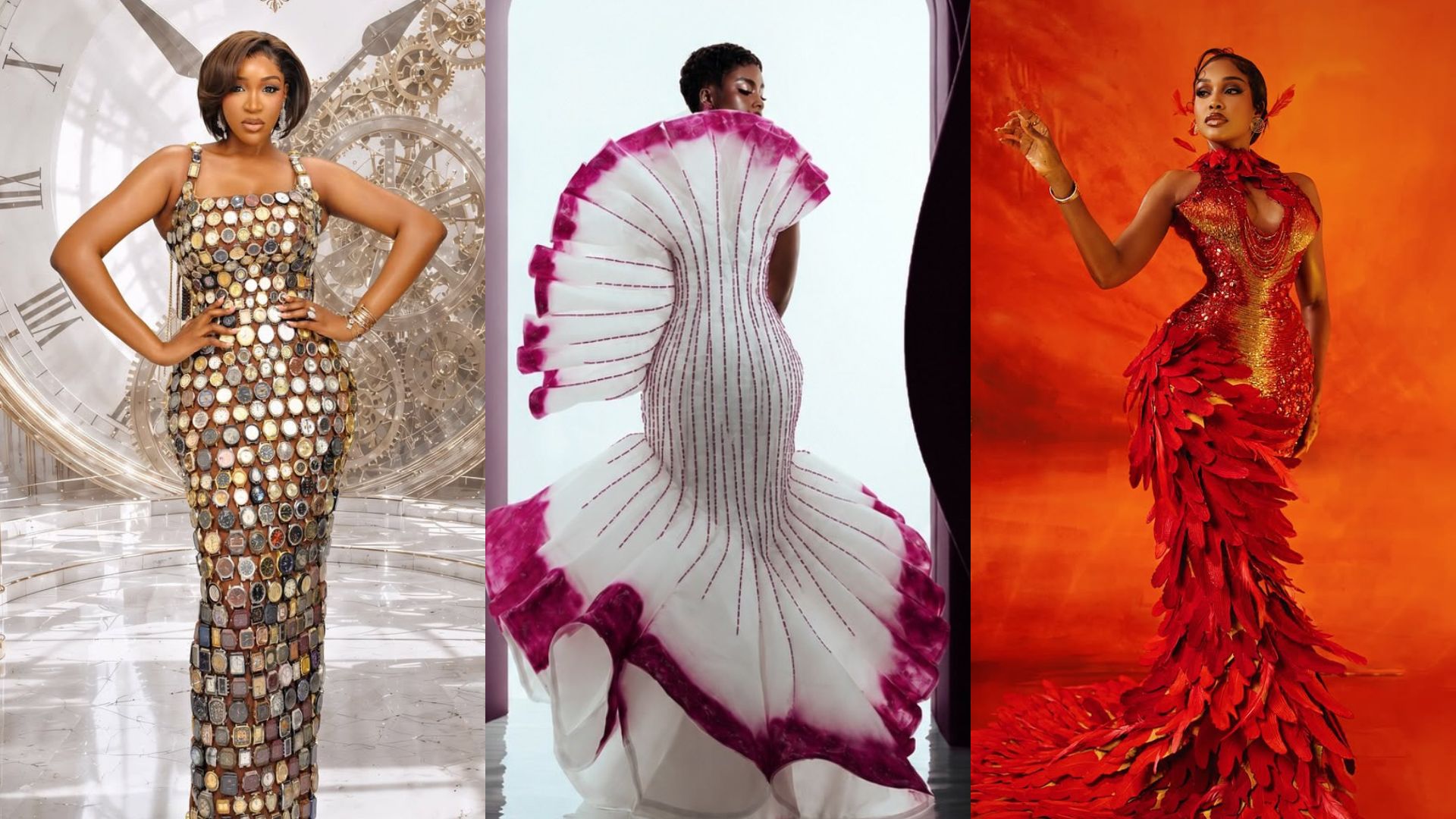
New Conversation: Reselling, Renting, and the Circular Closet
Not everyone likes the one-off tradition, and a growing number of voices within Nigerian fashion are beginning to speak out. According to Bukola,
“There’s definitely more waste awareness in fashion now, especially with red carpet culture and social media pressure to always wear something ‘new.’ More and more designers are talking about intentional production, re-wearing pieces, renting and creating garments with emotional value instead of flash consumption.”
Bibi Lawrence sees the same shift happening globally and believes Nigeria is just beginning to catch up.
“Globally, more and more designers are talking about making-to-order, re-wearing, renting, archiving, recycling, responsible fabric selection and creating garments that can live on beyond one event. In Nigeria, sustainability and occasion wear are still quite distant in practice as our occasion wear is deeply connected to weddings, asoebi culture, celebration, visibility and the desire to stand out.”
For Bukola, the repair is as much cultural as it is structural.
“Personally, we hope that the repetitive look will become more accepted and even celebrated. We also hope that more brands will start to archive, rent, preserve and rework garments instead of constantly producing new ones without a long-term plan.”

What is the world doing differently and what can Nigeria take from it
It would be unfair to frame Nigeria’s disposable culture as uniquely problematic without acknowledging the global context in which it exists. It is true that the pressure of constantly appearing in something new is a global disease, one shared by Hollywood, Paris, and Milan. The difference is that in these markets the infrastructure for what happens afterwards is much more developed.
In the established global fashion system, the biggest red carpet dresses are often owned by the houses that made them, not the celebrities who wore them. They are going back to the archives. They are loaned to museums. They travel to exhibitions. Halle BerryElie Saab’s dress from the 2002 Oscars now resides permanently at the Los Angeles Film Academy Museum. Nicole Kidman said her 1997 Dior gown, one of the most important red carpet moments in fashion history, would be passed down to her daughters.
That kind of institutional afterlife is still largely absent in the Nigerian context. There is no dedicated museum of Nigerian film and fashion. Formal archiving among domestic designers is the exception, not the rule. Bibi Lawrence sees that gap closing slowly but unevenly, and not through any industry-wide system. Garments that are not returned to designers often end up in the closet, and that closet eventually becomes a problem that no one talks about.
Permission to repeat
The most radical thing a major Nigerian celebrity can do right now is wear the same dress twice and own it completely. Not because I can’t afford a new one or because nothing else was available, but because the piece was beautiful, made by a Nigerian designer, still fits, and the story it wears is worth retelling.
It’s a permission residents have already given their favorites in spirit, we’ve seen so many iterations of Simi Sanya’s wedding dress recycled, referenced and reinvented since the wedding itself, proof that repetition doesn’t kill the cultural power of a look.
Bibi Lawrence clearly describes the future of the industry:
“Sustainability doesn’t mean taking the fantasy out of red carpet fashion; it means allowing the beauty and story of a garment to live beyond the event.”
Bucola’s hope is even simpler, that the industry stops treating one night as the lifetime of a garment, and starts treating it as the beginning of one.