Reno Omokri criticizes David for advocating for the release of the kidnapped Oyo schoolgirl at the World Cup concert


Nigeria’s ambassador to Mexico, Reno Omokri, has criticized Nigerian music star Davido for publicly advocating for his release schoolchildren kidnapped in Oyo State, arguing that such publicity could inadvertently benefit the kidnappers and complicate rescue efforts.
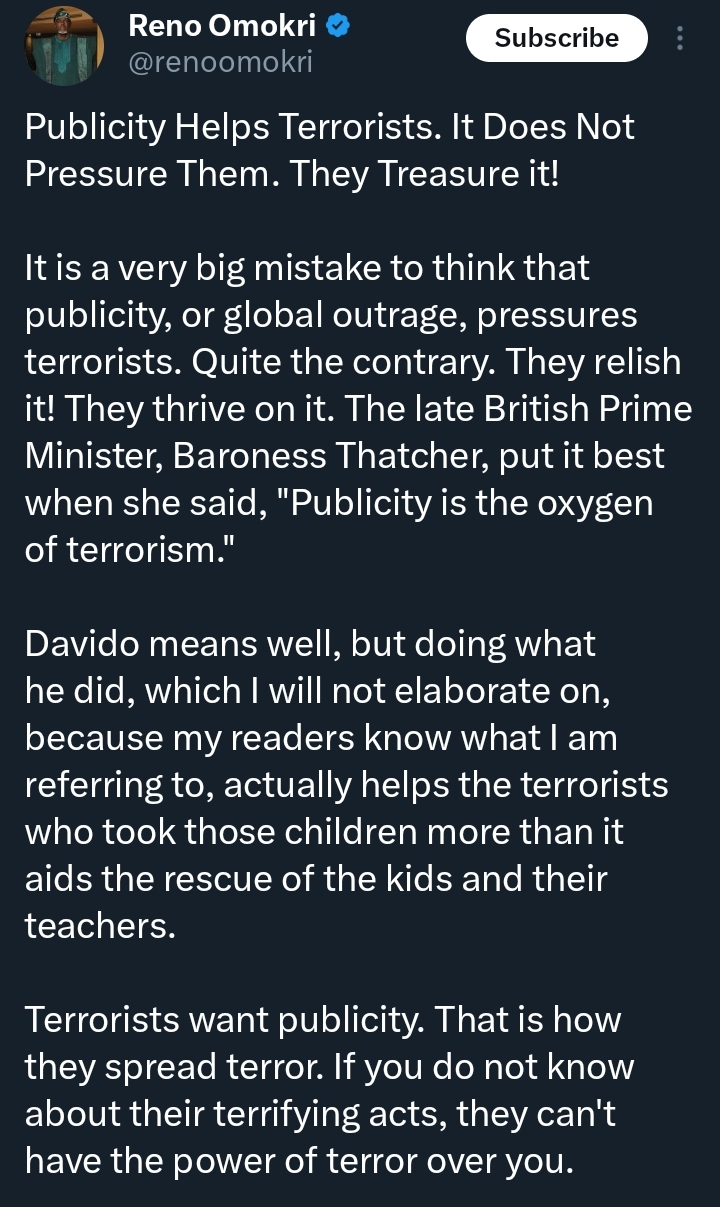
In a lengthy statement released Thursday, Omokri said many people mistakenly believe that global attention and public anger is putting pressure on terrorists.
According to him, terrorist groups often welcome publicity because it increases fear, spreads their influence and increases the value of their hostages.
He argued that while David’s intentions were noble, bringing the issue to a global audience could ultimately serve the interests of the kidnappers rather than the victims.
‘Publicity is the oxygen of terrorism’
Omokri quoted former British Prime Minister Margaret Thatcher, who famously described publicity as the “oxygen of terrorism”.
According to him, terrorist groups depend on public attention to spread fear and strengthen their psychological influence on society.
He argued that if terrorist acts remain largely unknown, the perpetrators lose much of their ability to instill widespread fear.
However, when such incidents attract significant media coverage and international attention, terrorists achieve one of their primary goals.
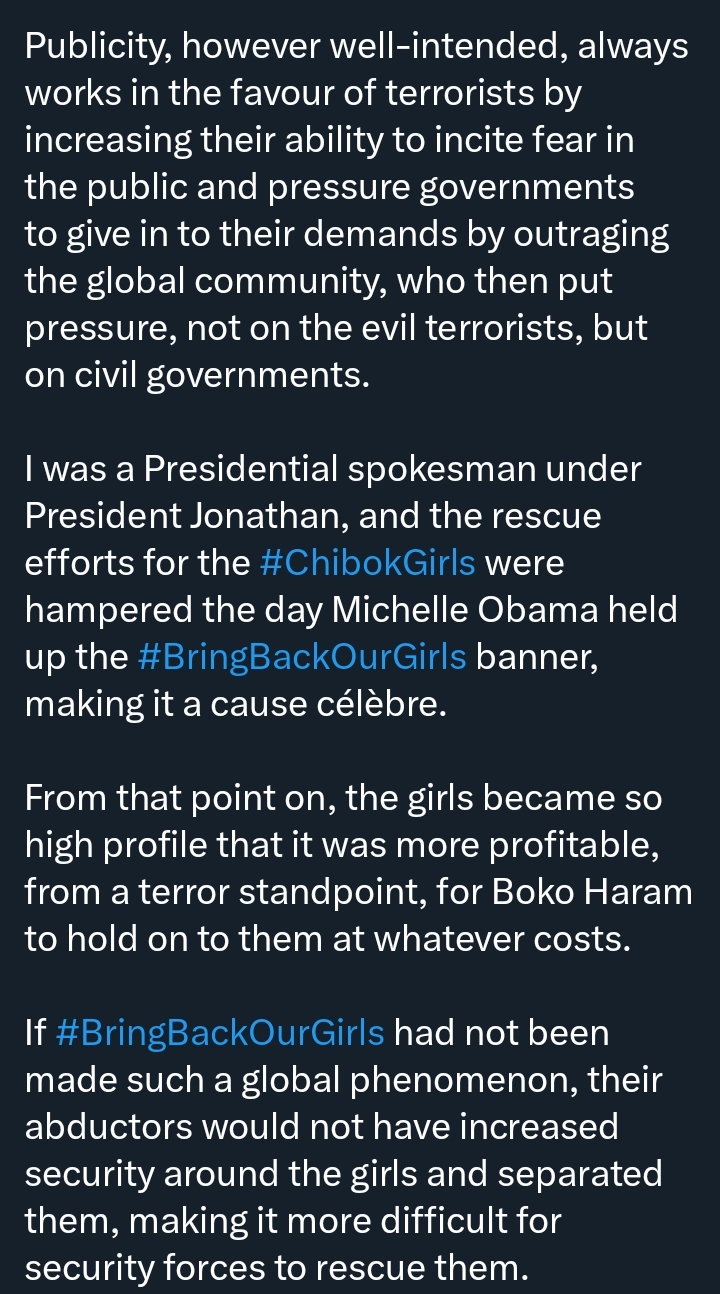
“Publicity, however well-intentioned, always benefits terrorists by increasing their ability to instill fear in the public and pressure governments to give in to their demands.” Omokri stated.
He claims the Chibok campaign has complicated rescue efforts
Drawing on his experience as a spokesman during the administration of former President Goodluck Jonathan, Omokri said rescue efforts following the abduction of the Chibok schoolgirl became more difficult after the campaign gained global prominence.
He specifically referred to former United States First Lady Michelle Obama holding a #BringBackOurGirls placard, an action that helped draw global attention to the campaign.
According to Omokri, after kidnapping became an international matter, the girls became more valuable from the kidnapper’s perspective.
He claimed that the increased attention prompted the insurgents to tighten security around the victims and disperse them to different locations, making rescue operations significantly more challenging.
“From that point on, the girls became so prominent that it was more profitable from a terrorist point of view for Boko Haram to keep them,” he said.
Security agencies are actively working, he says
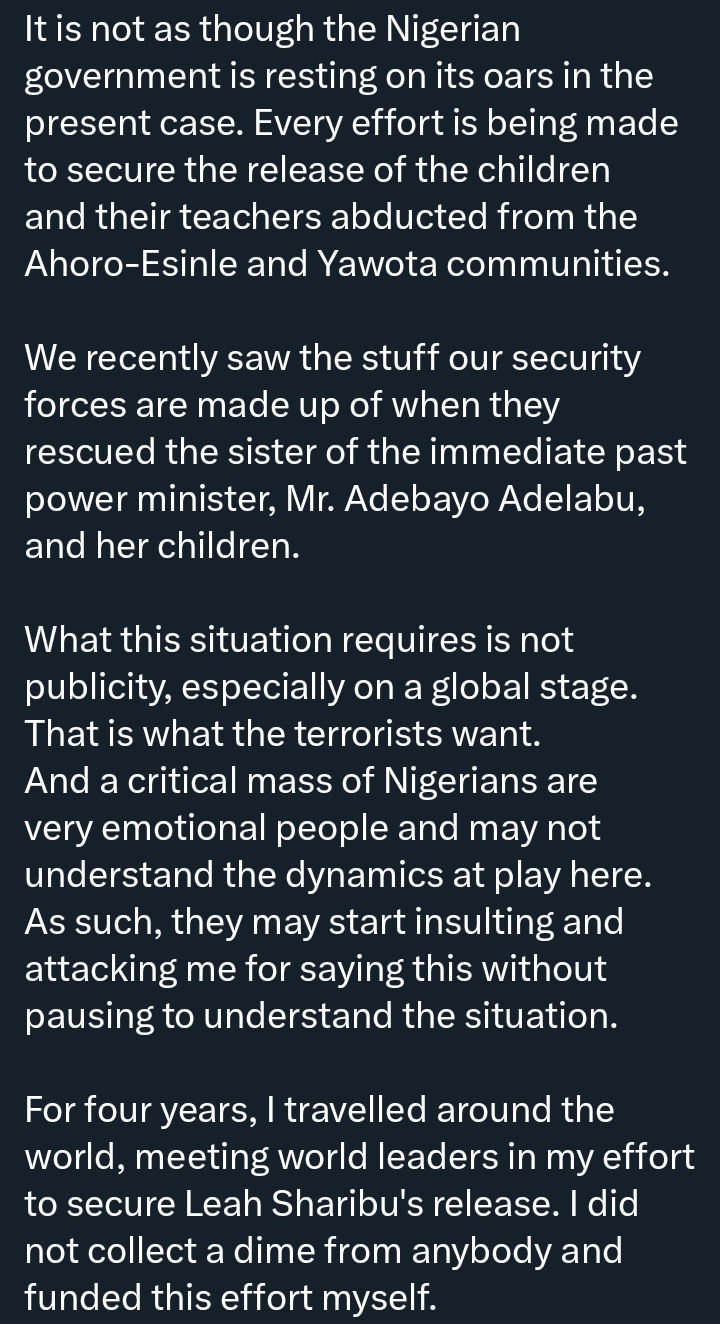
Omokri stressed that the Nigerian authorities are not ignoring the current kidnapping case involving children and teachers from Ahoro-Esinle and Yawota communities.
According to him, security agencies are making concerted efforts to secure their release and do not require global publicity campaigns to operate.
He pointed to the recent rescue of a relative of the former Minister of Energy, Adebayo Adelabu, as proof of the capabilities of the Nigerian security forces.
Omokri insisted that what was needed at this stage was a carefully managed response rather than international campaigns that could increase the strategic value of the hostages.
Recounts campaign for Leah Sharib
Omokri also referred to his years-long campaign for the release of Leah Sharibu, who was among the students abducted by terrorists from Dapchi in Yobe State in 2018.
He revealed that he personally funded a global advocacy effort aimed at securing her freedom, claiming that he had received no financial support from any person or organization.
According to him, the campaign took him through several countries, where he met with influential world leaders and officials.
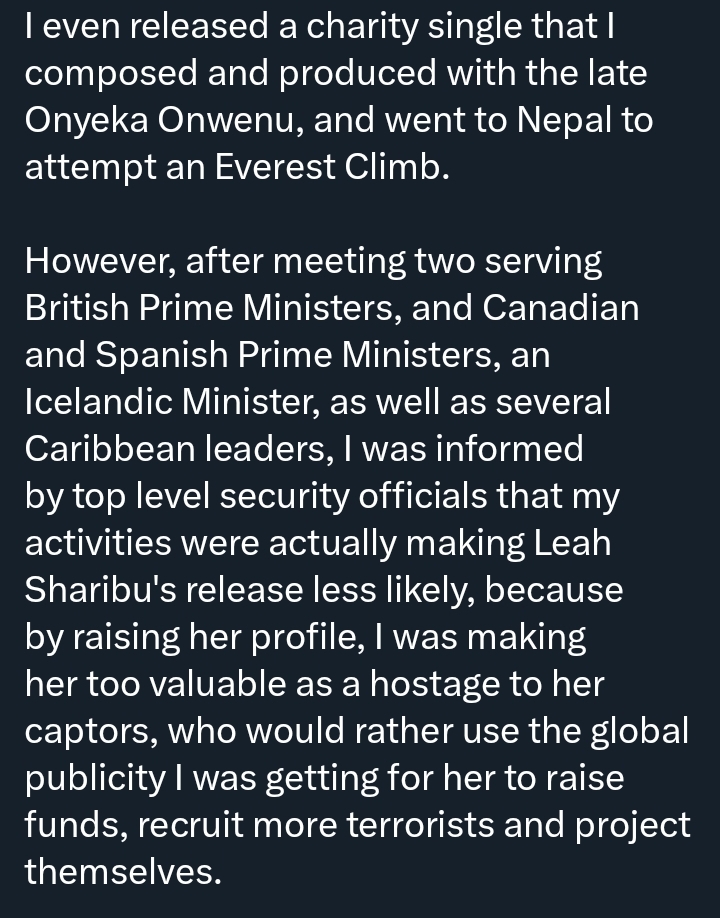
He said he had spoken to two British prime ministers, as well as the prime ministers of Canada and Spain, an Icelandic minister and several Caribbean leaders in an effort to rally support for Sharibu’s release.
Omokri also revealed that he collaborated with the late Onyek Onwenu on a charity single with the intention of drawing attention to Sharibu’s plight.
In addition, he said he traveled to Nepal and attempted to climb Mount Everest as part of an effort to raise international awareness of the campaign.
Why did he abandon the publicity strategy?
Despite extensive advocacy, Omokri said he was later informed by senior security officials that the campaign could reduce the likelihood of Sharibu’s release.
According to him, the publicity raised Sharibu’s profile to the point that her captors had greater incentives to keep her captive.
He argued that the attention generated by international campaigns could be used by terrorist organizations to attract recruits, raise funds and influence projects.
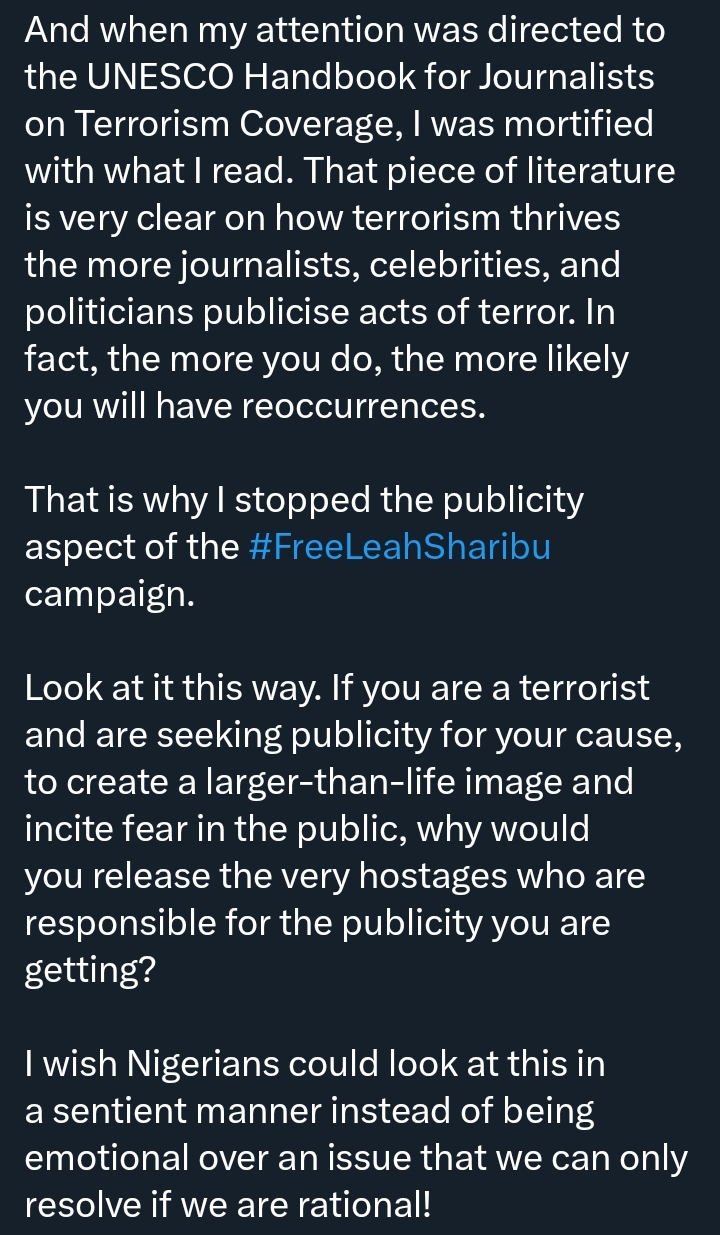
Omokri said he was particularly struck after reviewing the guidelines contained in UNESCO’s Terrorism Reporting Manual.
According to him, the publication highlights the dangers of excessive publicity surrounding terrorist acts and warns that great media attention can contribute to the goals of terrorist groups.
He said the information convinced him to end the publicity-oriented aspect of the #FreeLeahSharibu campaign.
It calls for a rational response
Concluding his remarks, Omokri called on Nigerians to approach issues related to terrorism with what he described as a rational mindset and not an emotional one.
He argued that while public campaigns are often driven by genuine concern for victims, they can inadvertently increase the bargaining power of kidnappers and make rescue operations more difficult.
Using a hypothetical example, he asked why a terrorist group would release hostages responsible for generating worldwide attention and publicity for its cause.
Omokri acknowledged that many Nigerians may not agree with his point of view, but insisted that understanding the dynamics of terrorism requires careful analysis and not emotional reactions.