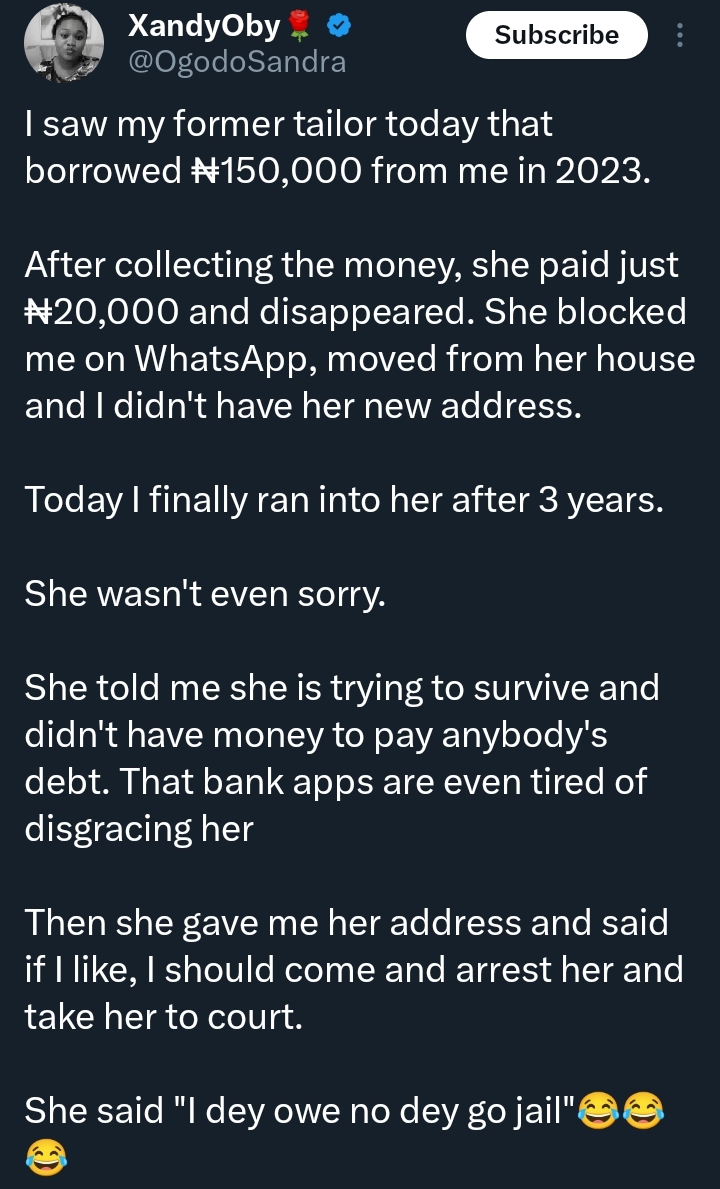
“I don’t owe, I can’t go to jail” — the lady shares the supposed nonchalant attitude of her debtor


A viral social media post detailing a chance encounter between a creditor and her long-missing self debtor has ignited an intense online debate on accountability, the waning culture of trust and the legal reality of debt recovery in Nigeria.
The post, which has garnered thousands of reactions, highlights the growing frustration among everyday lenders who find themselves financially burned by people they once trusted.
Vanishing Deed above ₦150,000
According to the anonymous poster, the saga began in 2023 when she loaned her then tailor ₦150,000.
After an initial repayment of just ₦20,000, the borrower reportedly cut off all ties — blocked the lender on WhatsApp, left her residence and left no forwarding address.
For three years, the trail went cold. That was until a chance face-to-face meeting recently brought the two women back together.
However, instead of the remorse or excuses usually expected in such confrontations, the lender was met with absolute defiance.
“Survival” versus responsibility
When confronted, the seamstress reportedly showed no remorse, citing the difficult economic climate as an excuse.
“She told me she was trying to survive and didn’t have money to pay anyone’s debt,” the poster said, adding that the debtor casually admitted that her financial situation was so bad that credit applications were “even tired of shaming her.”
In a bold display of negligence, the debtor went so far as to give her new address, daring the creditor to involve the police or the judiciary.
The confrontation culminated in a cheeky, Pidgin-English statement that has since become a focal point of online discourse: “I don’t have to go to jail” which means that debt is not a crime.